
Most board members serve because they care deeply about the mission. They bring experience, judgment, and a genuine desire to help the organization succeed. Control is rarely the goal.
And yet, control is often what shows up.
It usually appears during moments of uncertainty. A leadership transition. Rapid growth. Financial strain. External pressure. When outcomes feel less predictable, boards often pull closer to the work. More questions. More details. More opinions on decisions that once lived comfortably with staff.
This is often framed as a governance problem. In reality, it is usually a human response to uncertainty.
Good governance is not about proximity to decisions. It is about clarity of role, responsibility, and accountability. Strong boards do not need to weigh in on every choice to be effective. They create the conditions for sound decision making rather than trying to manage decisions themselves.
Control can feel active and reassuring. It can also quietly undermine leadership. When boards step into operational space, even with good intentions, they blur lines that executives rely on to lead. Trust erodes. Confidence weakens. Decision making slows.
Ironically, boards that resist the urge to control often find their influence increases. Clear governance strengthens leadership, stabilizes organizations, and reduces the very anxiety that drives micromanagement in the first place.
Good governance is quiet. It shows up in consistency, role clarity, and shared expectations. Its impact is not measured by how involved a board feels, but by how well the organization functions.
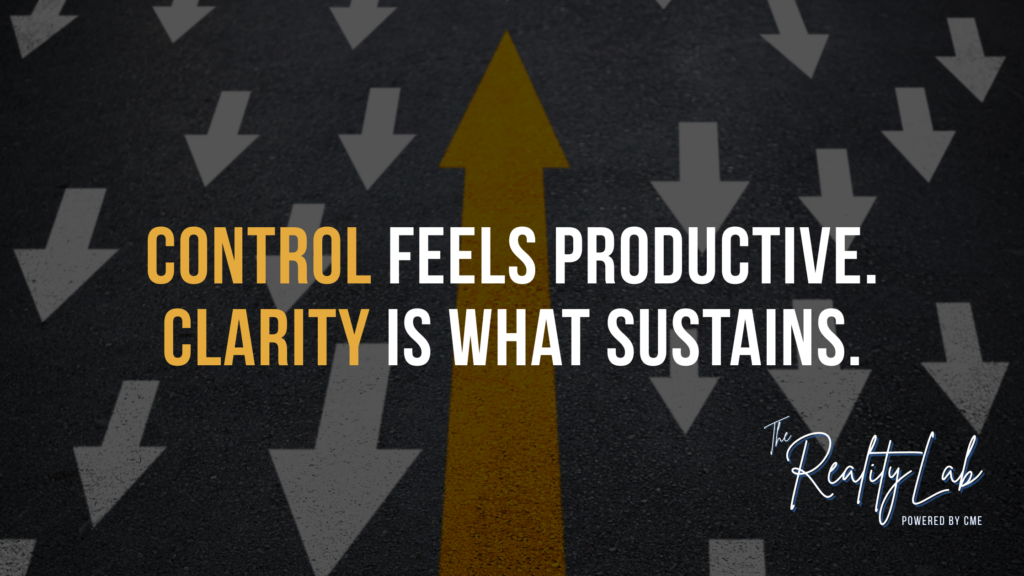
Control feels productive. Clarity is what sustains.
Footnote
This perspective is informed by longstanding nonprofit governance and leadership research emphasizing role clarity, trust, and clarification over operational control, including the work of Governance as Leadership and guidance from BoardSource, as well as adaptive leadership frameworks articulated by Ronald Heifetz. Across these bodies of work, effective governance consistently emerges not from proximity to decisions, but from clarity of roles, accountability, and disciplined restraint, particularly during periods of uncertainty.